By Frédéric Lert – © Frédéric Lert
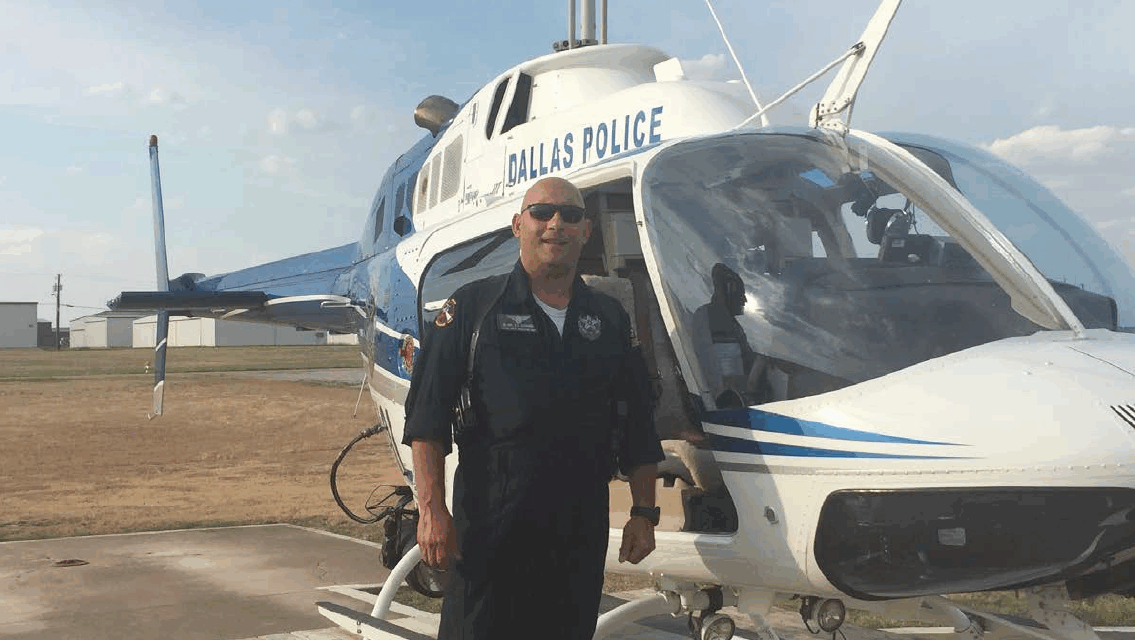
At 17, Laurent Lespagnol dreamed of becoming a police officer piloting a helicopter. Finding France too confining for his dream, two years later he set his sights on the United States to enroll in flight school. He was 19 and couldn’t string together more than three words of English. It was Adventure with a capital «A.» But Laurent Lespagnol had boundless willpower, incredible tenacity, and that little stroke of luck that favors the bold…
How were your first flights at flight school?
“I flew with an instructor who showed extraordinary patience with me! Since I didn’t understand a thing he said in English, he had to repeat the same instructions over and over… Every time he mentioned an instrument; he pointed it out to me. All of this required a huge amount of effort, but he did it… In the end however, you learned the language quickly, and the qualifications just kept coming… I got my private pilot’s license, then my IFR rating, my commercial pilot’s license, then my instructor’s license, single-engine and twin-engine. All of that in less than a year and a half. It went very fast. I then took on a whole bunch of odd jobs to fly as much as possible and build up my hours… For example, I ran ferry flights for the American subsidiary of Aerospatiale, which sells TB10 and TB20 light aircraft in the United States. I also flew for a NTSB expert who traveled across the country conducting audits. He had lost his license due to a medical issue.”
And you still wanted to become a police helicopter pilot?
“Yes, but for that, I needed an American citizenship! In the meantime, I had married an American woman, which allowed me to obtain a green card and work, but not as a police officer. While waiting for something better, I worked as a security guard in a shopping mall. Dallas Police Department (DPD) officers I knew advised me to work as a correctional officer. The green card grants access to this position, and it’s a good source of recruitment for the DPD.”
Provided you eventually obtained citizenship…
“Yes, but not only that… I also needed a bachelor’s degree and had to go back to the university. So, beside my job, I studied. Five years of hard work later, I graduated with a bachelor’s degree. Finally in 1999, having been married for five years, I was able to apply for citizenship. I filled out the entire application, attached the original of my Green Card, sent it to the relevant department, and waited. One month went by, then two, then six … without any news, nor any acknowledgment of receipt, nothing! And then one fine morning, a little over a year later, I learned that my application had been accepted! I was granted an American citizenship!”
So, you rushed to submit your application to the DPD!
“Yes, I was 28 years old! I took the tests, was accepted, and spent eight months at the police academy undergoing rigorous and demanding training. Right after, I started patrolling the streets of Dallas in my cruiser. The dream of becoming a police helicopter pilot was stronger than ever, and that’s when fate intervened. After recruitment had been suspended for several years, a position opened just as I was being promoted to senior corporal. That was the minimum rank required to apply.”
Was there a lot of competition?
“Seven of us were applying. In addition to being at least a senior corporal, candidates also had to have their private pilot’s license. Holding an instructor, commercial, or IFR rating wasn’t essential; the commercial rating was obtained within the unit after selection. The competition ultimately came down to me and a friend, and I was fortunate enough to be chosen. This was in March 2007, seventeen years after I first arrived in the country!”
What qualifications did you have at that time?
“In addition to my various aircraft qualifications, I also obtained my private helicopter pilot’s license, commercial pilot’s license, and instructor’s license in the civilian sector. This is far more than what’s required to join the unit, which created some unease within the community I was joining. The existing pilots wondered who I was and whether I could be a threat to them… But very quickly, their apprehensions disappeared, and I received a very warm welcome…”
So, did your helicopter qualifications allow you to advance in the hierarchy or to carry out specific missions?
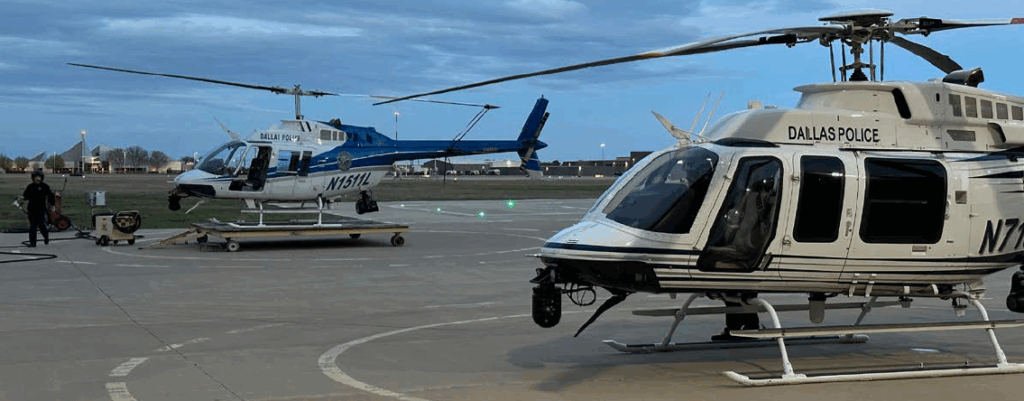
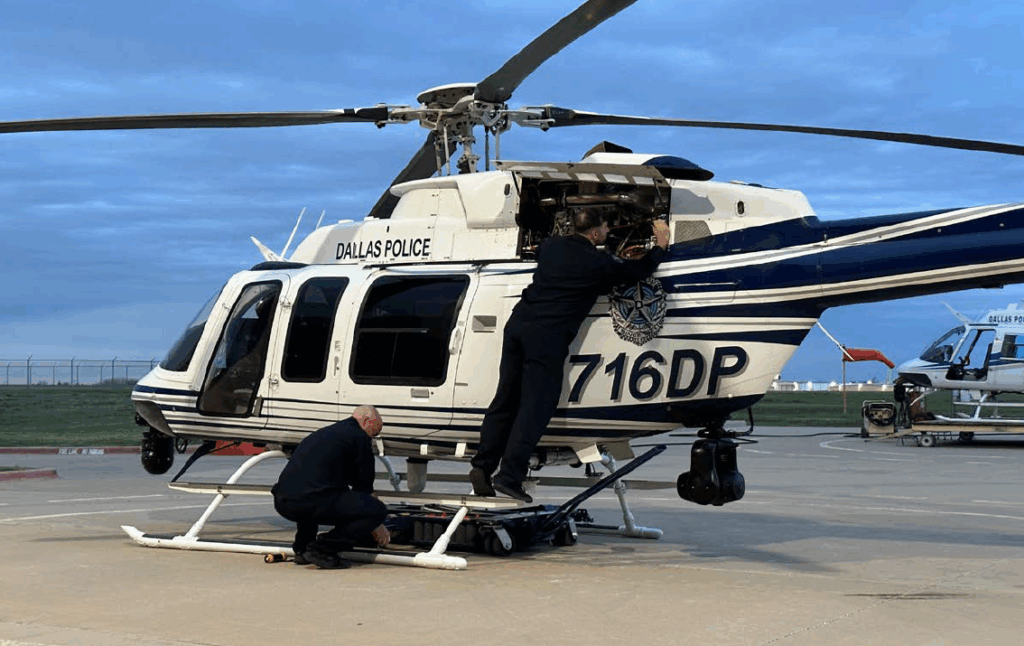
“Not at all! My IFR rating was useless since we only flew VFR, visual flight rules. That said, a new lieutenant came in one day, and like with every new arrival, this one wanted to make his mark by asking us to fly instrument. Since I was the only qualified pilot, I started training my colleagues, but that stopped very quickly because it was completely pointless! Our job is to support the police on the ground, and how can we do that flying in the clouds without being able to see the ground? Our helicopters weren’t suited for that purpose either. Although the Bell 407 was equipped, it wasn’t certified for that use…”
How were you organized within the department?
“When I arrived in 2007, we were fifteen police officers: one lieutenant, two sergeants, and twelve pilots. With twelve pilots, we could maintain 24/7 coverage with a first shift from 6:00 a.m. to 4:00 p.m. and a second from 8:00 p.m. to 6:00 a.m. the following morning. For the 4:00 p.m. to 8:00 p.m. shift, each of the two teams provided a pilot.”
Did you fly with a two-person crew, pilot and observer?
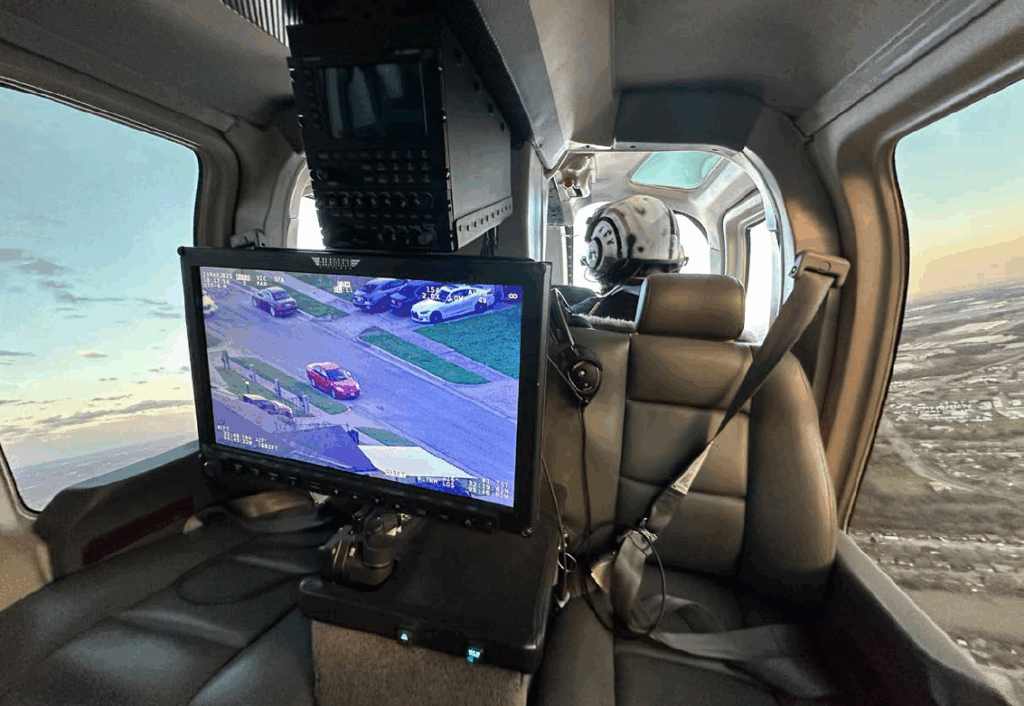
“Yes, but we were all qualified pilots, whether we were in the pilot’s seat on the right or the tactical observer on the left, responsible for managing the radios and surveillance equipment. In many other American police departments, the qualifications are different between pilot and tactical observer, but not with us!”