
In 1984, eight-year-old Ralphie’s death in Arizona’s remote San Tan Mountains became the catalyst that forever changed aviation safety. Critical care flight nurse Joan Sullivan Garrett, haunted by the tragedy of losing the young patient in such an isolated location, resolved that distance should never be a barrier to lifesaving medical care. Within a year, she founded MedAire, and by 1987, she had established MedLink, the world’s first global aviation emergency response center. That origin story, born from frontline medical experience, underpins a 40-year legacy that will be honored when Garrett receives the National Aeronautic Association’s Wright Brothers Memorial Trophy on December 11, 2025, in Washington, D.C., the latest in an impressive collection of honors.

“To be mentioned in the same breath as the Wright brothers, is extra special for me.” says Joan. “I had absolutely no idea of just how closely I would follow in the Wright Brothers’ entrepreneurial footsteps. They bootstrapped their vision into existence and kept it going for years beyond. They were dogged by detractors. Discredited by naysayers. And persevered. They prioritized family. Honored the value that each contributed. And throughout, chose the paths that would lead to fruition rather than those leading to self-enrichment.“
Uphill battle
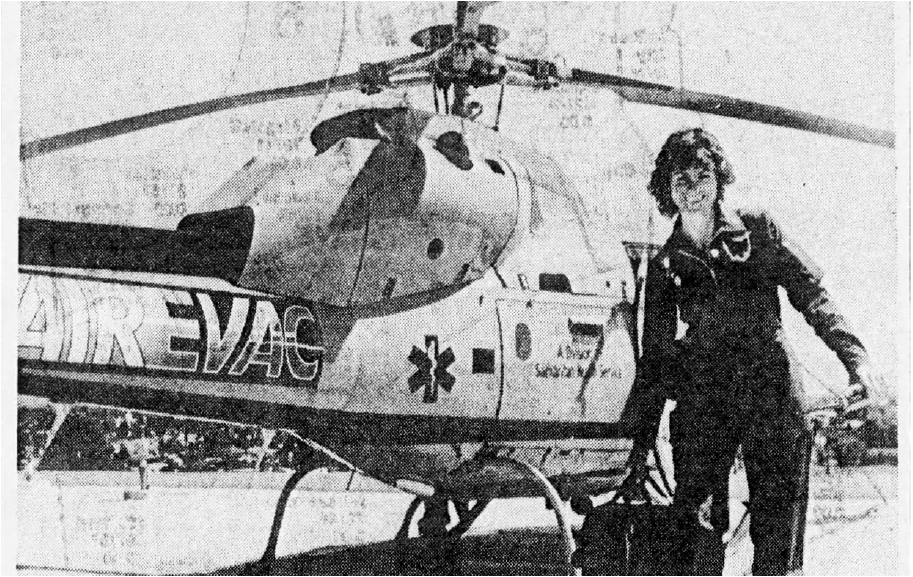
Garrett’s journey began in Arizona’s most challenging medical environments. As a registered nurse trained in advanced cardiac and pediatric life support, she joined Samaritan Air Evac in 1981, becoming part of the largest air medical program in the country. Her 13-week physician-led flight nurse training covered everything from neurologic injuries to altitude physiology; expertise that would prove foundational to her aviation career. Those clinically grounded decisions (standardizing medical kits, training non-medical responders, and embedding medical protocols into operations) became aviation industry standards. Her 1997 United States Congressional testimony prompted the FAA to require AEDs and enhanced emergency medical kits on U.S. aircraft.
“At the time of my testimony, advocating to improve in-flight medical preparedness was an uphill battle.” Joan continues. “Several prominent industry executives openly opposed it and were dismissive of any notion that serious medical events were occurring in flight. Our data proved otherwise and provided the impetus for Congress to mandate a two-year study, specifically monitoring in-flight cardiac and other life-threatening events.“
Three-legged stool
MedAire’s enduring success rests on Garrett’s deliberately integrated «three-legged stool» approach:
– Expert Assistance: 24/7 access to aviation-trained emergency physicians via MedLink for real-time medical decision-making, including diversion management and coordination with FBOs and airports.
– Medical Equipment: Evidence-based medical kits engineered for non-medical responders, continuously refined by clinical data and subject experts; today augmented by Digital Assessment Kit transmitting vitals and ECGs to MedLink physicians.
– Training: Aviation-specific courses like Management of In-Flight Illness and Injury, delivered in-person and virtually, ensuring crews can triage, stabilize, and communicate effectively under time-critical conditions.
“As a critical care and trauma flight nurse, I possessed expertise, equipment, and training in my work. It was a natural assumption that in any given medical situation, all three would be required for a successful outcome.” she says.
This triad transforms uncertainty into decisive action, reducing costly diversions while strengthening duty-of-care with measurable operational outcomes.
Technology Evolution
Garrett’s strategy consistently adopted the best available technologies as communications evolved from HF/VHF to ACARS, and from satellite to Wi-Fi-enabled apps.
“We challenge that paradigm daily, looking for ways to increase our quality of service, ease of use, and overall value. When we first started, VHF and HF radio were the only available communication options outside of the AIRINC datalink. Our services were (and continue to be) in lockstep with the industry as continually newer and more advanced communications capabilities are brought onboard the aircraft.” explains the former nurse.
MedAire’s extensive experience ensures technological implementations work effectively and can be easily adopted by operators. Medical kits, digital diagnostics, and tools like the Digital Assessment Kit and In-Flight App with AI-guided assessments allow crews to communicate effectively with emergency physicians, improving response times and decision accuracy.
Defining Industry Standards
Recent research published in JAMA Network Open confirms Garrett’s impact: in-flight medical events occur at a rate of 39 per 1 million passengers, but aircraft diversions occurred in only 1.7% of cases, a reduction attributed to MedAire’s telemedicine capabilities.

Business Aviation’s Trusted Partner
MedLink’s first call in 1987 saved a passenger’s life and marked the start of aviation telemedicine. Today, MedAire manages hundreds of cases daily across business and general aviation, minimizing operational disruptions and reinforcing duty-of-care protocols.
Inspiring the Next Generation
Garrett’s story demonstrates that professionals from non-traditional backgrounds can transform aviation. By combining expertise, equipment, and training, she set a gold standard for aviation safety.
“The aviation industry is built on innovation. It doesn’t matter where the next great idea comes from. What matters is the person who’s hatching that idea steps up and puts it into motion. We NEED it.“